Candy Cane Heart Applique: A Craft Fair Designer's Review
First Impressions: Sweet, Festive, and Instantly Readable
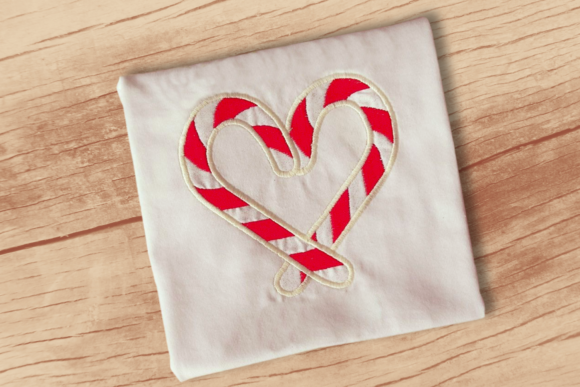
When I first pulled up the Candy Cane Heart Applique in my embroidery software, I immediately saw why this design belongs in a holiday craft fair booth. Two candy canes with embroidered stripes curve into a heart shape. That visual is simple, familiar, and emotionally warm. Customers walking past a market table do not stop for complicated designs they need to study. They stop for designs they understand in half a second. This one delivers exactly that.
The stripe detail on each candy cane adds texture without overcrowding the shape. The heart silhouette reads clearly even from six feet away, which matters enormously when a customer is scanning a crowded booth. I would describe the overall feel as festive, clean, and slightly rustic. It leans toward a farmhouse Christmas aesthetic rather than anything overly ornate or glittery. That is a strong selling position because farmhouse and minimal holiday decor have dominated handmade markets for several seasons now.
For Christmas craft fairs, this design fills a reliable niche: it is holiday-specific enough to feel seasonal, but the heart shape gives it a year-round warmth that extends slightly beyond December. Some customers buy holiday items as early as October. A heart made of candy canes does not scream Christmas in an overwhelming way. It whispers it. That subtlety sells.
Visual Appeal and Booth Display Strength
I always evaluate a machine embroidery design by asking one question first: will it stop a browser from walking past my table? The Candy Cane Heart Applique has strong stopping power for a few reasons. The red and white color contrast is naturally eye-catching. The curved heart shape creates a soft focal point on flat fabric surfaces. On a neutral tote bag or a cream tea towel, the design pops immediately.
From a booth display perspective, I would position products featuring this design at eye level near the front edge of the table. The red tones draw the gaze. If you hang a few finished tea towels on a rack or fold embroidered pillow covers on a riser, the candy cane stripes create rhythmic visual repetition that ties the display together. Grouping multiple items with the same embroidery file builds brand consistency and makes your booth look intentionally curated rather than randomly stocked.
One thing I always test is how a design photographs in booth lighting. Craft fairs often have harsh overhead fluorescents or uneven natural light from windows. High-contrast designs like this one photograph better than low-contrast pastels. The red stripes against white or cream fabric produce clean images for social media, which matters if you are an Etsy seller or small shop owner who promotes market appearances online before and during the event.
Tote Bags and Market Bags
A tote bag design featuring the Candy Cane Heart Applique is one of the highest-probability sellers I can picture. Canvas totes are affordable blanks, they embroider well with the right stabilizer, and customers buy them impulsively at craft fairs. Position the heart centered on a natural cotton tote, and you have a gift-ready item priced between eighteen and thirty dollars depending on bag size and quality. The design is large enough to feel substantial but contained enough to stitch efficiently.
Tea Towels and Kitchen Linens
Tea towel embroidery is another home-run application. Flour sack towels and woven cotton kitchen towels provide a smooth stitching surface. The candy cane heart placed in a corner or centered near the bottom hemline creates a handmade product that feels thoughtful without being fussy. Kitchen textiles sell reliably at holiday markets because customers shop for hostess gifts, teacher presents, and small stocking stuffers. A set of two embroidered tea towels tied with twine moves quickly.
Apron Embroidery
An apron embroidery application positions this design on the bib or pocket area of a half-apron or full bib apron. This works especially well for boutique bakers, home cooks, and anyone building a cozy kitchen aesthetic. The candy cane heart on an apron reads as charming and seasonal without being juvenile. I recommend testing placement carefully because curved apron surfaces and ties can shift during hooping. Use a strong adhesive stabilizer and baste the fabric in place before running the full stitch sequence.
Pillow Covers and Home Decor
An embroidered pillow cover with the candy cane heart brings the design into home decor territory, which commands higher price points. Linen or cotton-linen blend pillow covers in cream, oatmeal, or soft gray let the red stitches stand out beautifully. The finished product feels premium and giftable. At a craft fair, a displayed pillow on a small chair or bench invites customers to imagine the item in their own living rooms. That mental placement is half the sale.
Patches, Pouches, and Small Accents
For an embroidered patch approach, you can stitch the design on felt or twill, trim it, and finish the edges. Small fabric pouches with a zipper closure and the candy cane heart embroidered on the front make excellent gift packaging or standalone products. These lower-priced items round out a booth table and give budget-conscious shoppers an entry point. Patches sewn onto caps, denim jackets, or Christmas stockings offer creative upsell opportunities.
Stitch Quality and Practical Production Notes
Before committing to batch production, I ran a test stitch of the Candy Cane Heart Applique on medium-weight cotton with a medium-weight cutaway stabilizer. The stripe details on each candy cane require attention to stitch density. If the density is too high on thin fabric, you will see puckering around the stripe transitions. If it is too low, the white stripes lose clarity against light fabrics. I always test on at least three fabric colors before finalizing my product lineup. A design that stitches beautifully on natural cotton may look washed out on bright white or disappear on dark gray.
Practical testing checklist:Fabric and Surface Considerations
Not every blank is a good match for the Candy Cane Heart Applique. Thick fabrics like heavy canvas or denim are workable but require a sharp needle and possibly a reduced stitch speed. Textured towels can swallow fine stripe details, so I avoid terry cloth and stick to flat-weave kitchen towels. Curved cap surfaces present a challenge because the heart shape may distort if the cap is not hooped perfectly flat. For caps, I recommend testing on a structured front panel and possibly scaling the design down slightly.
Dark fabric demands attention to underlay stitching. If the design file does not include adequate underlay, the red and white threads may recede visually against black, navy, or charcoal backgrounds. I always test dark fabric combinations before producing inventory. A small detail like a missing underlay layer can turn a strong design into a muddy one.
Online Listings and Digital Product Potential
For sellers who operate as digital embroidery file shops or offer physical products on Etsy, this design photographs well for listing images. The candy cane heart has enough visual interest to work as a printable mockup base. I recommend creating lifestyle mockups showing the design on a tote bag hanging from a wooden hook, a tea towel draped over a mixing bowl, or a pillow cover resting on a neutral sofa. These context images help online buyers see the design as part of a real home.
If you sell the digital file itself, always verify commercial embroidery licensing terms before offering the design to customers. Check whether the license permits selling finished physical products, sharing the file, or modifying the design. Clear license communication protects your small shop product reputation and avoids disputes.
Batch Production and Craft Fair ROI
One of my biggest decision points for any design is whether it is repeatable for batch production without exhausting my machine or my patience. The Candy Cane Heart Applique appears to have a moderate stitch count based on the stripe detailing and the heart outline. That places it in a sweet spot: detailed enough to feel premium, efficient enough to produce a dozen units without burning an entire day.
I estimate that a focused production session could yield six to eight finished tea towels or four to six tote bags in a single afternoon, assuming a single-needle machine and organized workflow. Hooping time, thread changes, and trimming between colors all add up. The candy cane stripes likely involve at least two thread colors, possibly three if an accent outline exists. Plan your color sequence to minimize stops.
From a craft fair product pricing standpoint, items featuring this design can carry a higher perceived value than simpler silhouette designs because the stripe detail signals more work and more material. Customers at handmade markets understand that visible stitch complexity correlates with time and skill. That perception supports pricing at or above your standard embroidery item rates.
Brand Consistency and Customer Engagement
Repeating the Candy Cane Heart Applique across multiple product types strengthens your brand story. A customer who sees the design on a tote bag, then spots a matching tea towel and a coordinating pouch, experiences a curated collection. That repetition builds trust and increases the likelihood of a multiple-item sale. I often arrange my booth so a customer can buy three items with the same design motif in different formats, and that bundling strategy works.
The design also invites conversation. Candy canes and hearts are universally recognized symbols. Shoppers comment on them, share childhood memories, and linger at the table. Every moment a customer spends engaging with your products increases the chance of a sale. A design that sparks warmth and nostalgia is a quiet sales tool all on its own.
Final Designer Verdict
The Candy Cane Heart Applique earns a strong recommendation for holiday handmade product lines. It balances seasonal charm with clean visual appeal. It stitches efficiently. It plays well across multiple product formats from kitchen textiles to tote bags to home decor. For Etsy sellers, boutique makers, and craft fair vendors building inventory for winter markets, this design deserves a place in your production rotation.
My only caution is the standard one for any detailed machine embroidery design: test thoroughly before committing to a large production run. Check your thread palette on your actual blanks. Verify hoop size, file format, and commercial use terms. Create at least one finished real mockup and photograph it under your typical booth lighting. If those steps check out, the Candy Cane Heart Applique is ready to become a reliable seller in your holiday lineup.